

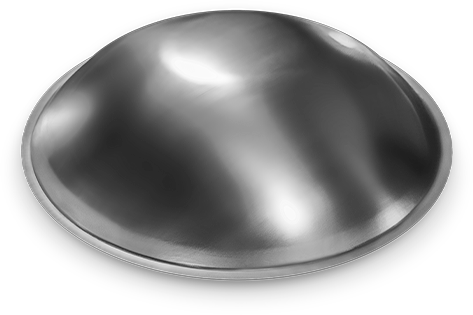
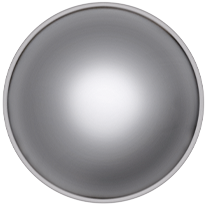
Diameter
530mm
Total shell diameter (including rim)
554mm
Rim width
12mm
Height
130mm
Min Shell thickness
0.9mm
Max Shell thickness
1.0mm
Total weight
≈ 2130g
• Consistent Thickness Distribution: Ensures better sound quality and structural integrity.
• Time-Saving: No need to source and form the material yourself – focus solely on building your instrument.
• Precision: Identical shell geometry and thickness across batches mean fewer unexpected issues.
• Stable Composition: Avoid the risks of chemical variations. For instance, AISI 430 can have up to a 50% chrome variation, which we’ve eliminated.
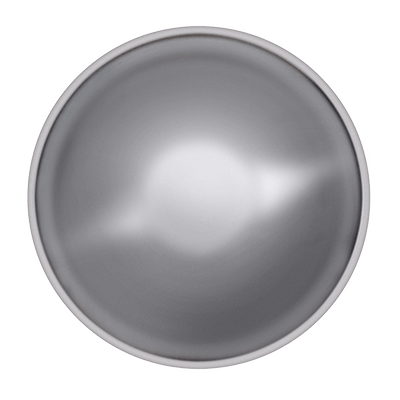
• Optimized Shell Curvature: The central area is designed for easy ding creation, even for low and mutant dings.
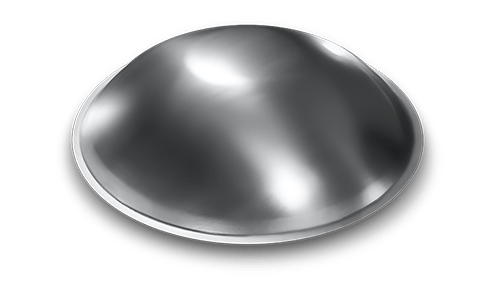
• Improved Aesthetics: Minimal scratches near the rim, which can be polished away with ease.

• Protective Film: Every shell comes with a protective film adhered to it.* This provides extra protection, preventing potential scratches. Depending on your building style, you can create the dimples and shape with the film still in place, saving time on cleaning the shell before annealing. *Currently, only the AISI 430 is offered with the protective film.

• Uniform Thickness: The difference between the thickest and thinnest areas is less than 10%.
• Controlled Composition: Carefully managed for greater tonal stability and enhanced resistance to oxidation. Batches remain consistent.
• Enhanced Stability: Our shells are around 100g heavier than others, offering a more ceramic timbre without limiting scale options.
We provide top shells only that can also be used as bottom shells. We believe the shape and tune of the Gu hole is part of the maker’s creation and uniqueness.
Each production batch undergoes strict control of material composition and forming parameters. This process ensures that mechanical and acoustic properties remain stable over time, allowing makers to establish a reliable and predictable workflow. With consistent material behavior from one batch to the next, builders can refine their shaping and tuning processes with greater confidence and repeatability.
Each shell is protected using purpose-designed packaging solutions that help absorb impacts, reduce surface friction, and preserve material integrity during shipping. The use of protective film on selected materials adds an extra layer of defense against scratches and surface wear, helping ensure that shells arrive in optimal condition and ready for the next stage of crafting.
• Long sustain, bright and warm sound, and pronounced attack.
• Shiny finish with visible lamination lines.
• Harder to work with than other materials, but ideal for certain sound profiles.

• Balanced sound, combining the percussive, ceramic quality of Nitrided Steel with the long sustain of Stainless Steel.
• Slightly lower volume perception than AISI 430.
• Rougher surface without lamination lines. Softer and easier to shape but requires precise tuning for stability.
• This steel alloy has remarkable versatility and unique properties.
• Compared to the AISI 430 and 439, it offers the longest sustain, with the ability to adjust it by heating at different temperatures.
• Renowned for its deep and warm sound, with round shoulder tones.
• It’s the easiest material to tune and stabilize.
• It has a matte finish, similar to the AISI 439.
This material is available without the PVC film.
> PRICES:
AISI 430: 65 EUR each shell.
AISI 439: 70 EUR each shell.
AISI 441: 70 EUR each shell.
> MINIMUM ORDER:
We ship boxes of 11 Shells. You can choose how many shells of each Steel composition you want.
By buying 9 boxes, you will benefit from a 5% discount.
> SHIPPING COST:
Please, contact us through the email info@mudrahandpan.com
Yes. Many manufacturers prefer to test small quantities before investing in larger volumes. This allows them to evaluate how the material responds to hammering, forming, and tuning within their own production process.
Yes. Batch-to-batch consistency is one of the biggest concerns for handpan makers. For this reason, the shells are produced with strict control over composition and thickness to ensure reliable and repeatable results. Minor differences from one batch to the other are expected.
Thickness is maintained with precise control, minimizing variations across different areas of the shell. This helps prevent unexpected stress points in the material and improves performance during the forming process. Our thickness variation is less than 10% throughout the shell.
The shells are protected using materials designed to reduce impacts and prevent surface friction during transportation. In some cases, a protective film is also applied to help prevent scratches.
The geometry of each shell is protected using structured packaging and appropriate protective materials. The goal is to ensure that the shells withstand transportation without structural deformation.
Yes. The shells are designed to perform well with different styles of hammering, forming, and tuning. This allows each maker to continue using their own methods without needing major changes to their workflow.
Shells with uniform thickness and stable composition reduce the chances of structural failure during production. This helps improve material utilization and reduces waste over time.
Yes. The structural stability allows makers to work with different note layouts and scale configurations. Each configuration can result in unique sound characteristics, explored by many artists across different musical contexts.
The choice depends on the desired sound, ease of shaping, and the manufacturing method used. Some materials provide longer sustain, while others make stabilization or shaping easier. The team at Mudra Handpan can assist in selecting the most suitable material based on your building style and the sound characteristics you aim to achieve. Feel free to contact us if you have any questions.
Yes. Predictable and consistent materials help beginners better understand how the metal behaves and reduce common mistakes during the learning process.
The shells are delivered ready to be used in the manufacturing process. However, additional adjustments may be made depending on each maker’s preferred method.